Saturday, December 22, 2012

Two Poems About My New Granddaughters


On October 29th, my tenth grandchild was born. Her name is Alma Drew Youngren. On December 18th, number eleven came into the world. Her name is Willa Louise Hacket. Both of them needed medical intervention at birth. Alma, particularly, was very sick. She spent four weeks in the hospital and there was a brief period when it looked like she might not make it. She is fine now. Willa’s problems were much less serious, but coming on the heels of her cousin, were a significant scared for all her family. Willa, also is now doing fine.
These are two poems I wrote about my newest grandchildren.

Which way to go?

Alma has crossed the border,
Waded the water,
But she hasn’t decided to
Stick around
She is a tiny wetback
From the country
Where
The dearly departed
Tell campfire stories to
The unborn.
She has one foot
In the finite future
And the other
In the infinite past.

Which way to go?
Ahead to warm snuggling in the family bed
Hyperactive doggy kisses from Riley,
Chasing cousins whose legs are seven years longer than hers,
Good Night Moon, The Run Away Bunny, Where the Wild Things Are
Getting on the school bus
Learning cribbage
Algebra, geometry, calculus
Some skinny boy with braces and wispy chin whiskers
A dorm room with a tattooed roommate from Cincinnati
Boston, Brooklyn, Austin
Another boy with muscles like an anatomy chart
Couple of kids
Joy, heartbreak, more joy, more heartbreak
A man with two kids of his own
The house that finally feels like home
Saying good bye to grandparents, parents, friends
Saying good bye, good bye, good bye?
And it all goes by in a heartbeat.

Or
Metaphorically
(Meaning we can’t understand it)
She bakes stollen with Thea
Plays tennis with Bob
Smokes Camels with Maizie while sewing a quilt
Looks up Johnny and finds him running the tilt-a-whirl
Hears all the old stories about me from Ray, Francis, Jerry, and Harriet
Pats Ian’s hand and says, “Its OK, baby. Its all OK.”
Prepares a hell of a welcome for Natalie and Armin.

Which way to go?

The Jelly Bean Seems to be Here to Stay

Miranda, my only biological child,
Was conceived
In The Astro Motel
In Dodge City, Kansas.
It was 1971.
I was married to Andrea back then.
We were driving
A Volkswagen van
Across the US of A.
Andrea could feel her ovaries ping.
“Motel tonight,” she said.
Being twenty-six
I just smiled
And nodded my head.
Four weeks later,
In Sweetwater California,
A pregnancy test confirmed
What we already knew.
Until the day she was born,
Miranda was known as “Sweetwater.”
Forty years later,
Saying my prayers,
As I wait to fall asleep,
Sometimes I throw in,
“God bless Sweetwater.”

I don’t know anything
About the conception of
My mother Maizie.
She was an only child
Orphaned before she was two,
Raised by Aunt Callie and Daddy Jim,
Her and cousin Hobert, another orphan.
They helped take care of the “real” kids;
Frank, Charlie, Dave and Mary Jane.
Maizie had already been married once
When she met my father, Johnny.
She was nineteen.
He tripped her up
While they were walking through
The rotating barrel
At Jefferson Beach
Amusement Park.
It was easy to stay
On your feet in the barrel
By walking into the motion,
Stepping up the wall
As it rotated downward.
But it was credible
To trip over the feet
Of the long legged blond
And end up entwined
As the polished wood floor slid by under you,
Struggle to your feet,
Help her up,
Go down again,
Roll around,
Go to the beer garden by the lake,
Dance real close.

One thing led to another,
But I didn’t come along
Until Maizie was twenty-six.
“Them doctors told me
I couldn’t have children.
But I showed them.”
She only showed them once.
Maizie taught me
to say my prayers
As I wait to fall asleep.

Miranda is forty now.
She’s pregnant.
She showed the doctors.
Once.
This is likely to be
My only
Biological grandchild,
The only child, of an only child, of an only child, of an only child.
For a long time
I wasn’t allowed
To tell anyone
About this only child
Who took so long to come along,
Who in the first ultrasound
Was the size
Of a jelly bean.
Now it is OK
The jelly bean
Seems to be here to stay.
I can tell everyone.
I can write poems.
Saying my prayers
As I wait to fall asleep
I can say,
“God bless the jelly bean.”


Monday, November 19, 2012

Peace Corps Story Slam: A Honduran Miracle


On November 17, 2012, The Brooklyn-Queens Association of Returned Peace Corps Volunteers had a story slam at Two Moon - Art and Coffee House in Brooklyn. The photos above are me telling my story Honduran Miracle and below is the story.

-->
Honduran Miracle
Titi was my neighbor when I lived Sonaguera, Honduras. His appearance was a bit strange.  His head was slightly asymmetrical.  One day while we were walking around town, I asked him, "When you were younger did you have health problems?"  He replied, "Si hombre," with the emphasis that means, yeah, without a doubt.  He proceeded to tell me the following story:

When he was nine he fell out of a mango tree and suffered a serious blow to his left eye socket.  He pointed out a good-sized scar running through his left eyebrow.  Several years later, when he was 15, without warning, he began hemorrhaging from his nose and the left side of his face began to swell up.  He was taken to the hospital in LaCeiba, two hours away, the third biggest city in Honduras.  They couldn't diagnose him, so they sent him on to San Pedro Sula, the second biggest city.  There, they said he had a tumor and attempted surgery.  However, in the middle of the operation they decided they couldn't proceed and stitched him up.  He has a scar about six inches long on his throat below his left jaw.  He had been in the hospital in San Pedro Sula for six months when he was transferred to Hospital Escuela, the big teaching hospital in Tegucigalpa, the capitol of Honduras.  Two surgeons from the The United States were coming to examine him and another boy whom the Hondurans considered untreatable.  The North American doctors said that surgery might be possible in the US, maybe in Panama or Costa Rica, maybe even in Cuba, but not in Honduras.  They said he had two or three months to live.
   It is not clear to me how or why but another doctor gave a second opinion.  She had studied natural medicine in Japan.  She said he should drink a tea brewed from the rinds of pineapple, ground "pimienta gorda" (I think this is all spice.), and honey.  She prescribed drinking it several times a day for six months.  The pineapple rinds were for cleansing, the pimienta gorda to stop the bleeding and the honey would act as an anti-inflammatory.  Four months later, not only was Titi still alive, but the swelling was mostly gone and he had stopped hemorrhaging from his nose.  The natural medicine doctor said he could stop drinking the tea.  The other doctors said he didn't need an operation.  At the time he told me the story, he was twenty-seven.
   Later, I went back to his house because he wanted to show me a photograph of himself when he was in the hospital.  In the picture the left side of his head, from eyebrow to chin, was at least twice as large as the right.  Titi’s parents, Don Rodolfo and Doña Lola, joined us to look at the picture.  They retold the story.  Don Rodolfo said he knew the president of Honduras at the time.  The president worked on getting a visa and money for Titi to go to the US for the operation.  During this waiting period he started drinking the tea and got better.
   I asked if they thought it was the tea or a miracle.  Doña Lola said, "Clearly it was a miracle.  I prayed every day."  Don Rodolfo said that when the doctors predicted that Titi had two months to live he told them, "But you’re not God and God will decide how long my son lives."  Then Don Rodolfo turned to Titi and said, "Did you tell him about the time you got your dick stuck in your zipper.  Now, that was really serious."


Sunday, July 15, 2012

Sex Dreams

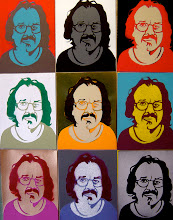
(Portrait of me by Tillie Leonard-Fritzmeier)


Dream #1
I am making love to a pregnant woman.
In real life, I know this woman.
Her husband left her
Just after the birth of their second child.
She is much younger than me.
We get along fine.
In the dream her husband has already left,
But she is still pregnant.
She comes to me and says,
“It’s been so long since I felt good.”
I know she is talking about her husband leaving,
But I know, too, she is talking about sex.
I say, “I’m going to make you feel good.”
She closes her eyes
And lets her head fall back.
She is grateful for my touch
And that I’m there.
Her husband has left,
But I’m still there.
I’m grateful to be touching her.
Her belly and breasts
Are so tight they are shiny,
But they don’t get in the way.
There is no clumsiness.
Our lovemaking
Is an exchange of
Generosity and gratitude,
Gratitude and generosity.
It flows back and forth,
Back and forth.

Dream #2
I am taking the sun
On the roof of a rusted out car
In the middle of a big field of tall grass.
I’m naked.
The grass is yellow like gold.
You can see the wind blowing.
It moves the grass in waves.
I know I am in Africa.
I’m taking the sun
On the top of a wrecked car
In the African veldt.
Way off, across the golden grasslands,
I see movement
That is different
Than the wind blowing the grass.
Way off, there is a line of black men
Moving toward me.
They are black black.
Like only African skin is black.
Their faces are painted.
Yellow and white designs
Around their eyes
Across their cheeks and foreheads.
They are carrying spears and shields.
The shields are painted
With the same designs as their faces.
Then I see,
Maybe twenty yards
In front of the hunters,
Something yellow is moving through the yellow grass.
I have know since the beginning of the dream,
Since before I saw the hunters,
What was coming.
A lion zigzags toward me through the grass
In a low crouch,
Moving fast, keeping
Close to the ground.
It can’t double back.
It has to come forward.
I’m not afraid.
I have full knowledge of what will happen next
He is so close
I can look into his yellow eyes.
He puts his paws up on the car.
He is standing up out of the grass.
He is not hidden anymore.
His yellow body stands out clearly
Against the rusty hulk of the car.
He licks me and his lick feels like sex.
His lick lifts my genitals
And fills me with anticipation
And hope.
I wake up.
But before I’m all the way awake,
Before the dream is completely over,
I know the hunters kill the lion.
He gave up his cover for me.
He gave up being
A yellow lion in yellow grass.
Some of the spears
Just clatter against the side of the wrecked car,
But some, enough,
Before I am fully awake
Pierce him.
.

Dream #3
I am reading erotic poetry
In a New England library
Just two blocks from the ocean.
I have read about
Making love to a pregnant woman.
I have read about being licked
By an African lion.
Although it is early in the season,
As I begin reading about a third sex dream,
Outside the library windows,
A hurricane is beginning to blow.
Hurricane Delores, or Desdemona, or Delphinium…
I can’t remember, but
Her winds rattle the windows
And her rains splatter the roof.
Sea foam blows off the tips of waves
And skitters along the street,
Past the post office,
Past the hotel,
Past the surf shop,
Past the library.
Delores/Desdemona/Delphinium
Is making a hell of a lot of noise.
The audience leans forward.
They cup their hands to their ears
Trying to catch my words.
Random words are heard or misheard:
“Licked, semen, blow, clitoris, tits.”
Wow! One man thinks. This is the sexiest one yet!
Delores/Desdemona/Delphinium
Lifts the roof and swirls through the room.
The lighthouse painting crashes to the floor.
Nautical charts of Narragansett Bay
Are ripped from the wall.
The case displaying the
Scrimshaw collection is up-ended.
My lips keep moving
But my words are snatched away
And spread all along the East coast
From Cape May to Old Orchard Beach.
The audience is left
To compose their own erotica.


Thursday, March 1, 2012

The Prisoner

The Prisoner
Jose Isabel “Chavelo” Morales Lopez has been imprisoned in Honduras for more than three years without evidence, sentencing, or justice.
Three of the seats in the fifteen-passenger van are taken up with luggage, but there are still fourteen people on board. So it is packed, perhaps not by Honduran standards, but still pretty full. Starting out at 7:00 in the morning, we are all making the two-hour drive from the town of Tocoa in the state of Colon to La Ceiba in Atlantida to visit the prisoner.
Here is a break down of who is riding in the van: there is me. Then there is the driver. He is a young guy from Tegucigalpa who may have gotten more than he bargained for when he signed on for this trip. He has a wife and a couple of kids back in the capitol. For a few years he was on the farm team for a professional soccer team, but now he is a mechanic. He got recruited to drive the van when the regular driver couldn’t make it.
Also on board are six human rights activists from Chicago. Their group, La Voz de los de Abajo, organized the trip because they are dedicated to human rights and justice in Honduras. There is not much for them to be optimistic about. Maybe they can exert a little international pressure in the case of the prisoner.
The leader of the group is a little tense this morning. She was at a meeting with Honduran human rights groups late into the night. The meeting may have been under surveillance. A white truck may have followed the van back to our hotel. She asks us to be on the look out for license plate “pad 0075”.
A radio journalist from Boulder, Colorado has joined the group to go to the prison. She is squeezed in with a digital recorder in one hand and an I-phone in the other. Sometimes she records conversations and interviews with one, sometimes with the other, sometimes with both.
Sitting in the jump seat back among the luggage is a handsome, muscular Honduran man who works at a community radio station. He is dedicated to human rights, but is also looking forward to getting home because he has 3,000 coffee plants he needs to get in the ground. Hopefully in three years he will be harvesting and selling coffee.
The other Honduran activist traveling in the van is a pretty woman who supports landless people in finding abandoned property they can legally occupy. These land occupations are allowed under Honduran law to a very limited extent, but even when they are probably legal they are always contested and conflictual. Much violence occurs when the owner of record realizes land he has abandoned is being claimed by groups of poor people for sustenance farming. The compañera is articulate and fierce in her advocacy for poor people, especially poor women. She recently learned that one of her sons is in a detention center for undocumented immigrants in Texas.
The rest of the space in the van is taken up by the prisoner’s family; his mother, his young, pretty wife, one of his teenage sisters and his youngest brother. The prisoner and his family are from a small town in the Aguan Valley called Guadalupe Carney. The town is named after a radical Catholic priest. It is located on abandoned military land. A group of compesinos organized and occupied it. After years of murder, bloodshed, disappearances, torture, and intimidation, the community was collectively given title to most the land they had claimed. It is not great land. Much of it may be contaminated by waste left by the military, but it can grow enough beans and rice to live on. There is a radio station, a school, a health care center, a sewing collaborative, an open air barber shop, and a small restaurant under a thatched roof. Everyone is dirt poor, but for now they own the land. Guadalupe Carney is a model of what can happen when land is redistributed to those who need it most.
The prisoner became the prisoner over a piece of land in Guadalupe Carney that was still under dispute.
The prisoner’s mother has been up most the night cooking. She has prepared a five-gallon bucket full of nacatamales, still warm and steaming in their banana leaf wrappings. Everyone will have something delicious to eat for lunch when they are visiting her son. She has also baked enough bread and cakes to fill a large plastic basin covered by a clean embroidered cloth. She sells the baked goods to prisoners, visitors, and guards to cover the cost of these trips to see her son. The mother is diminutive and energetic. She has given birth to eighteen children. The prisoner is her second oldest son. I bet she is at least ten years younger than me.
The prisoner’s youngest brother is eleven year old. He is only in the van fifteen minutes when he is looking for a plastic bag to throw up in. One of the members of the Chicago delegation wants to help him out. He offers him Dramamine. This man has two kids of his own back in Chicago. He is an attentive father. He video chats with his family whenever he can find a wifi connection. After the correct dosage has been figured out and the boy has downed the Dramamine tablet, the man from Chicago gives him his smart phone to play with. This boy may well be the only kid from Guadalupe Carney to ever play Angry Birds. He seems to forget about being carsick. It is too soon for the pill to have kicked in. I am thinking the Droid is better medicine than the Dramamine, but then, twenty-minutes later, he pukes in the plastic bag. His mother and sister clean him up and he goes back to the game.
At 8:00 AM the van stops so we can eat breakfast. I watch the Honduran boy and think about my own nine grandchildren. One of them has his own sailboat that he races on Narragansett Bay. Another is an avid baseball player and fan who has been to major league games in stadiums on both coasts. They all have computers, cell phones, and various configurations of X-Box, Play Station, and WII. While their lives have not been problem free, none of them has seen a neighbor shot in the face. Nor have they had their community surrounded by masked soldiers in flack jackets carrying automatic weapons longer than they are tall. Nor have they had people from their town that they see on the street everyday get taken away in the middle of the night never to be seen again. Nor have they had their beloved older brother put in jail on trumped up charges and held for three years without sentencing.
Before the prisoner was the prisoner he sold ice cream to the kids in Guadalupe Carney. He and his beautiful, young wife had a little daughter. The little daughter died while the prisoner was incarcerated. Then his father passed away. He was not allowed to attend either of their funerals.
In the restaurant where we are having breakfast, I ask the prisoner’s youngest brother if he wants to play a game. I have him sit opposite me at a table and I put a quarter in the middle of the table between us. I show him how to make a goal by placing his index finger and pinky on the tabletop. I tell him when it is his turn he can flick the quarter three times to try and get into my goal. I beat him five to four in a hard fought match. Then the van driver beats him five to three. Then the van driver effortlessly beats me five to two.
About 9:00 AM, the van passes through the city of La Ceiba, the third largest city in Honduras. A few years ago, probably in 2006, I was in La Ceiba for the annual carnival. Part of the celebration was a parade through the streets. Mel Zelaya, then the newly elected president of Honduras, rode by on a white horse. From the crowd, I waved to him with carnival beads strung around my neck. Just three years later, Zelaya woke at 6:00 AM to find himself surrounded by 150 masked soldiers in full riot gear carrying automatic weapons. They put him on a small plane, flew him to Costa Rica, and left him standing on the runway still in his pajamas. That was the end of Honduras’ brief, twenty year, experiment with democracy. Before he was deposed Zelaya was trying to settle the land disputes. In a country with no safety net, no welfare, no food stamps, no social security, he was inclined to view favorably the notion that landless people should have a few acres on which they can scratch out a living. There was nothing radical about his positions, but they were consistent with his center-left leanings. The coup set off a downward spiral in which politically motivated killings happen with sickening regularity and complete impunity. The legal system, barely functional to begin with, has lost all legitimacy. It is plausibly stated in Honduras that if you are poor and a rich man wants your head; it will be rolling in the street before the sun goes down. Not coincidentally, violence related to gangs and drug trafficking has exploded since the coup prompting the United Nations to declared Honduras the most violent country in the world.
Just past La Ceiba, the van turns off the highway onto a dirt road running through a pineapple field. In the morning light, this field is breathtakingly beautiful. There is green everywhere. Spiky green, waist-high pineapple plants radiate out in symmetrical rows seemingly for miles. Each plant has one immature fruit that is still green rather than yellow or golden. Around the perimeter are green palm trees and beyond the green palm trees are green mountains; undulating, folded green mountains. In the middle of the beautiful pineapple field is the prison.
The prisoner’s mother and the leader of La Voz de los de Abajo approach the main gate and speak with the guards. In fifteen minutes the prisoner comes out and arrangements are made for us to have lunch in a shady area off to the side. Benches are carried out and placed in a “U” shape. While his mother hands out nacatamales and bread, the prisoner stands in front of the group and introduces himself. His name is Jose Isabel Morales Lopez. He is known as Chavelo. Some of the inmates also call him Chele, the generic Honduran nickname for guys with light skin.
Chavelo has told his story many times. There is interest in his case among international human rights activists. He gets quite a few visitors who want to do what they can to support him and advocate for his freedom. The details of the events that happened three years ago and turn Chavelo into the prisoner will always be contested. There will always be other versions of the story told by other people.
The land in dispute in Guadalupe Carney was claimed by the camepsinos and by a wealthy landowner with adjacent property. It is likely that the landowner would have prevailed as the case went through the process of determining ownership. However, he was not willing to let that process play out. Instead, he installed a force of private guards on the adjacent property with the intent to run off the occupiers. Tensions escalated. Both sides were armed. Shots were fired. The guards ran to a cinderblock building and continued firing from inside the building. Those occupying the disputed land shot back. There were wounded on both sides. The gunshots brought people running from the more settled section of Guadalupe Carney. The scene became more and more chaotic. Then suddenly the cinderblock building exploded and was consumed in an intense fire. Perhaps it had been used to store armaments or fuel. In the gunfire and the flames five of the landowner’s guards died, including his nephew.
In the middle of the chaos, Chavelo was tending to one of the wounded. Someone took a picture of him with a wounded man in his arms. The photo established that he was on the scene. He was quickly arrested and has been in prison ever since. There is no evidence that he fired a shot or that any of his actions resulted in the deaths.
As Chavelo tells his story and answers questions I draw him. He is a very handsome man. His right eye is blind, its center dark and dead. Since he’s been the prisoner he was struck in the face by a strand of barbed wire from a weed cutting machine. There is no regular medical care at the prison and his family can’t afford to hire a doctor to come and take care of him. As I try to get a likeness to emerge from the lines and marks I am making, I see that there is a way in which his strong, defined features are concentrated in the center of his face. His cheeks and chin are broader, smoother, more serene. The most intense point in his face is where his eyebrows and the bridge of his nose come together. Although I haven’t asked permission, Chavelo knows I am drawing him. He smiles at me a couple of times in the middle of his story. Line by line, mark by mark, I’m storing Chavelo’s beautiful, damaged face in my memory.
The sun is shinning. Chavelo’s mother urges everyone to eat another nacatamale. Chavelo has his arm around his wife. The youngest brother has found a scrawny kitten to play with. My drawing is much admired. There is laughter. The human rights activists pledge their support. The reporter from Boulder records it all on digital audio files. Soon we will pile back in the van and head toward the airport where the gringos will catch flights back to the United States. Jose Isabel “Chavelo” Morales Lopez will still be the prisoner.

Wednesday, January 4, 2012

A Poem and a Painting for my Grandson Simon Devol


Advise to My Grandson


If you’re a man,

Even the tight, green bud of a man,

You’ve got to love the snake

And embrace the skull.

You’ve got to check into

The Motel Diablo,

Shoot craps at the crossroads,

And light a candle for El Maximo.

Whisper in San Simon’s pink plaster ear,

“No tengo miedo, cabron, No tengo miedo.”

Blow cigar smoke in his face.

Leave him a tumbler of Havana Club.


If you’re a man,

Even the tight, green bud of a man,

You gotta fight the devil everyday.

Let me Polonify your skinny ass.

Remember, "The soft and the pliable will defeat the hard and strong."

If you fight him head on,

You’ll get hog tied, up a creek, flat on your back.

T’ia chi the fucker,

Yin and then yang his shiny red behind.

High five him, buy him a beer, put an arm around his shoulder.

You call the shots.

Then,

Then,

Walk away.


If you’re a man,

Even the tight green bud of a man,

Then,

Then,

You can walk the dog,

Rock the cradle,

Go round the world,

Learn to dance in three languages.

Kiss your best buddy smack on the lips.

Play air guitar like Johnny B. Good and Jumping Jack Flash.

Let your heart break while singing,

“I couldn’t sleep a wink for trying.

I saw the rising of the sun.

All night long my heart was crying

You’re the one, You’re the one, You’re the one.”

And then…

Monday, October 31, 2011

When Artists Go Bad

When Artists Go Bad

While passing through

The Albuquerque airport

I saw Dale Chihuly in chains;

Thick ones on his wrists,

Thin ones that tinkled

Around his ankles

Checking his stride as he walked.

He was being transported

By federal marshals.

One was muscular, handsome, Hispanic.

The other wore a Hawaiian shirt

And an expression

That said

To maintain law and order

Murder is always justified.

In this context

Dale’s eye patch

Seemed somewhat sinister.

So did the tears tattooed

In the corner

Of his visible eye,

And the spider web on his elbow.

The artist and his two guards

Were given special handling

At security.

I lost sight of them.

But later they were seated

On stools at the counter of

All Aboard Noodles.

Dale was seated in the middle

Eating from a steamy glass bowl

With a porcelain spoon,

Slices of pink pork

Like poker chips

Floating in golden broth

White noodles looped

Like calligraphy.

Tying not to stare

I passed them by.

When first class was called

For my flight to DC

I made a last minute trip

To the bathroom.

Dale stood at the urinal

Dick in manacled hands

Pissing loudly.

The Hispanic marshal

Stood one step behind him

A respectful distance

But within easy arm’s reach.

They spoke like

Business acquaintances

Which I suppose they were.

“When we woke up this morning

I had to scrape the ice off

The fucking windshield.”

“Where did you guys

Stay last night, Los Alamos?”

“I don’t know where the hell we were.

He was driving.”

The marshal spoke perfect English,

But Dale had a heavy Spanish accent.

Strange I thought at the time

For a one-eyed glassblower

From Tacoma.

I wanted to say,

“Mr. Chihuly,

Over the years

Your art has given me

So much pleasure.

Thank you for creating

All that beauty.”

I wanted to say

“That bowl of noodles

Made my mouth water.”

Under the circumstances –

The US marshal,

The chains,

Dale vigorously shaking his dick –

I said nothing.

They walked out together

Law enforcement holding the elbow

Of a ground breaking artist

Gone bad.

I was filled with regret

For gratitude unspoken.

For passing on the noodles.


(I did spot Dale Chihuly in an airport recently, but it was Newark not Albuquerque and he was not in chains. I do regret not having spoken to him.)

Saturday, December 18, 2010

An Old Guys Love Poems

This is a self-portrait I drew when I was in my mid to late twenties. The drawing is close to forty years old.
I've been writing Portrait of the Artist for a full year now. I started it last December as a way of paying attention to and celebrating aging. I turned 65 in May making me officially an old guy.
With this posting I am bringing this project to and end. However, this blog will go on as a place where I can write about anything that is on my mind. And...

In January I will be launching Portrait of the Artist as an Old Man - Part II, in which I will be writing about and presenting portraits of working artist over the age of 65. So my focus will be shifting from autobiography and memoir to biography, to an examination of aging and creativity not just in myself, but in others. I'm very excited to be working on this project and grateful to everyone who has supported it with donations and suggestions.


Now to close out this portion of Portrait of the Artist as an Old Man:

An Old Guy's Love Poems

Stories

I.

Deb, long before I knew you

I spent a weekend on Block Island

With Miranda.

I think she was three.

That makes it thirty-five years ago.

We climbed down the bluffs

And built driftwood sculptures on the beach.

(In a snapshot, she wears

A tiny red and white plaid bathing suit.

Her hair,

That refused comb or brush,

Halos her head)

That night, thunder rattled the windows

Of our hotel room

And lightening toppled a chimney near by.

Miranda slept through it.

I stayed awake to protect her.

I’ve told you this story

A hundred times.

I want you to know all my stories,

To be proud of me

And to forgive me.

II.

“Deb, tell me about the time

Lars fell asleep riding the bike.”

“We had been directing camp in Barnes.

The Dutch families gave us a bunch of bikes to use.

We had been riding bikes all summer.

At the end of camp,

The Dutch families said they would pick them up.

We decided it would be fun

To ride a couple of them to their house.

It was a two or three hour ride.

Lars had Helen in a seat on his bike.

I was pregnant with Jesse.

It was the end of camp

So we were exhausted.

Lars was leading and he just fell over.

I said, ‘Are you alright? Is Helen alright? What happened?’

He said, ‘I fell asleep.’

That was about it.”

You’ve told me that story

A hundred times.

I want to know all your stories.

I want to know about when you and Loie

Were “the little girls.”

I want to know about you getting stoned with Janet

And running the tollbooths on 95.

I want to know about the time you and Lars

Didn’t have thirty-five cents to cross the Mt. Hope Bridge.

I want to know about Helen and Jesse jumping from the hayloft

And crumpling the roofs of the antique cars.

III.

Deb, last September 2nd , before dawn,

When you were home in Rhode Island,

I pedaled my bike a couple of miles

Out into the Nevada desert

To an art oasis of upholstered couches and chairs

And fake palm tree umbrellas.

Just as the sun was raising

I sat next to a skinny

Sixteen-year-old boy.

In lieu of shaking hands,

He hugged me

Like the prodigal son coming home

To his long lost father.

This boy had two names.

The name given him at birth

Was Alexander, my middle name.

It means, he tells me, ruler of many.

But his desert name in Shanghai.

He is too stoned to talk much.

He is sweet and spacey.

He is much too thin.

If it were possible,

I’d take him out for a cheeseburger.

He would order

The brown rice, tofu, organic shitake, goat cheese burger.

“Have I told you this story?”

“Only about a hundred times.”

I want you to know all my stories.

Living the story is half the story.

Telling you the story completes it.

IV.

Deb, remember when…

Remember when…

Remember when…

Remember when we got massages

From the blind guy in Truth or Consequences?

Remember when we climbed Cadillac Mountain

To watch the sun rise?

Remember when we saw a palliated woodpecker

From our canoe?

Remember when we got robbed

On the beach in Guatemala?

Remember when we dropped Miranda and Helen off

At U-Mass?

Deb, remember everything that happened in Honduras?

I want to remember all our stories.

I want to tell them to each other

A hundred times.


Husband in Winter

In the middle of the night

I wake up in my warm bed.

I nudge Deb softly.

Yeah, she is still there.


I get up to pee,

Walk past the coats in the hall,

The door to the basement.

The clock on the stove says 2:10.

My old bladder knows the hour,

If not the minute.

There is moonlight coming in the back door.

I can make out the silhouette of the big rosemary plant.

I sit.

No sense in trying to steer

When I’m half asleep.


The thermostat is set at 58.


I’m cold

When I slip

Back under the covers.

But, Deb is warm.

I press against her,

Snuggling, spooning.


One day,

One of us

Will be alone

In this bed.

One of us

Will have to wait

While the heat of one body

Warms it up.